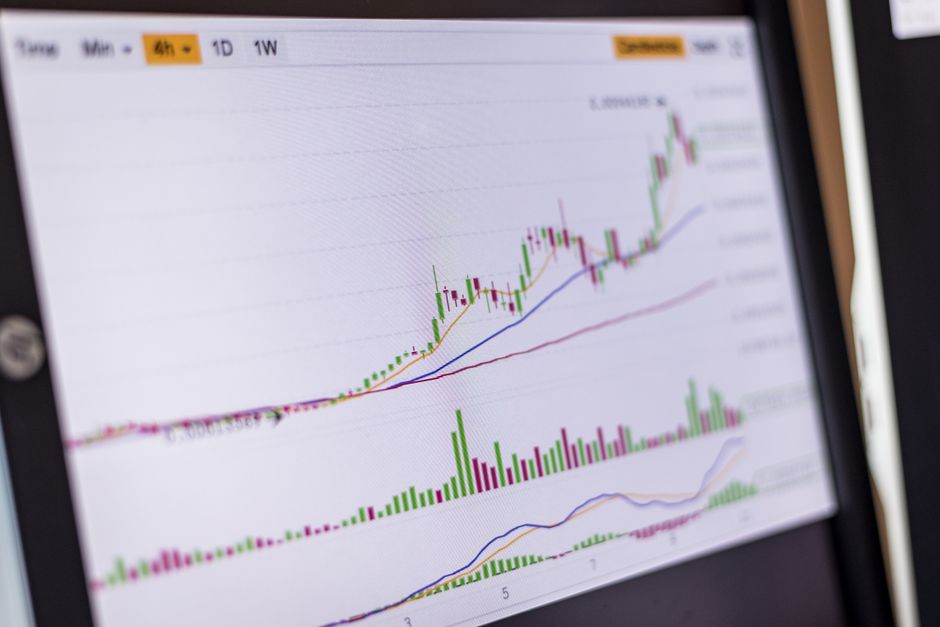
Stock Market Rally Continues as Tech Shares Lead Gains
Major equity indexes in Canada and abroad recorded gains for a third consecutive session, with technology and consumer discretionary sectors providing the primary momentum. The successive advances have drawn attention to the interplay between sector-level performance and broader macroeconomic indicators, particularly those related to inflation. Market participants and analysts continue to monitor these developments within the context of monetary policy expectations and corporate earnings reports.
The recent upward movement in indexes is often examined through the lens of sector rotation and investor sentiment. Technology shares, which include companies involved in software, hardware, and digital services, have shown notable strength, while consumer discretionary stocks—those tied to non-essential goods and services—have also contributed to the positive tone. This pattern is frequently analyzed in relation to shifting expectations around interest rates and inflation data, though the precise drivers remain subject to multiple interpretations.
Understanding the dynamics behind such market movements requires a process-oriented approach. Rather than attributing gains to a single factor, observers typically consider a combination of economic data releases, corporate performance, and global market conditions. The following sections outline key elements of this environment, focusing on methodology and information rather than predictions or recommendations.
Technology Sector Leads Index Performance
Technology shares have been a focal point of the recent rally, with several large-cap companies in the sector reporting results that have influenced index-level performance. The technology sector often carries significant weight in major indexes, meaning that movements in these stocks can have an outsized effect on overall index returns. Analysts frequently examine metrics such as revenue growth, profit margins, and forward guidance to assess the sustainability of sector trends. In the current context, the strength in technology has been broad-based, encompassing both established firms and newer entrants.
From a methodological standpoint, the performance of technology shares is often evaluated relative to other sectors and to historical averages. This comparative analysis helps contextualize whether recent gains represent a deviation from typical patterns or align with longer-term trends. Additionally, factors such as capital expenditure on infrastructure, research and development spending, and adoption rates of new technologies are considered. These elements are examined within a framework that acknowledges the cyclical nature of the sector and the influence of external variables, including regulatory changes and global supply chain dynamics.
It is important to note that sector leadership can shift over time, and the current prominence of technology does not imply a permanent state. Market participants often assess the durability of such trends by looking at earnings revisions, valuation levels, and investor positioning. While the recent gains are notable, they are interpreted as part of an evolving market environment rather than a definitive signal of future direction. The information available suggests that technology shares are presently a key contributor to index movements, but the broader market narrative includes multiple interacting factors.
Consumer Discretionary and Inflation Context
The consumer discretionary sector has also participated in the recent upward movement, reflecting a complex relationship between consumer behavior and economic conditions. Companies in this sector are typically sensitive to changes in disposable income, employment levels, and interest rates. Recent data points on inflation have been cited by analysts as a factor influencing expectations about monetary policy and, by extension, consumer spending patterns. Easing inflation concerns can affect the discount rates applied to future earnings, which in turn may influence equity valuations across sectors.
However, the connection between inflation data and sector performance is not deterministic. Analysts employ various models to assess how changes in inflation expectations might impact different industries, taking into account factors such as pricing power, input costs, and consumer demand elasticity. The consumer discretionary sector, in particular, is examined for signs of resilience or vulnerability in the face of shifting economic conditions. This analysis is inherently conditional, as outcomes depend on a wide range of variables that are difficult to predict with precision.
In the Canadian context, the consumer discretionary landscape includes a mix of domestic and international companies, each with distinct exposure to global supply chains and currency fluctuations. The recent gains in this sector are therefore viewed as part of a broader assessment that incorporates trade flows, commodity prices, and regional economic indicators. While the sector’s performance has contributed to the overall index advance, it is analyzed alongside other sectors to form a comprehensive picture of market dynamics.
Methodological Considerations for Market Analysis
When interpreting consecutive sessions of index gains, it is useful to consider the analytical frameworks commonly employed by market observers. These frameworks often include the study of price action, volume trends, and breadth indicators—such as the number of advancing versus declining stocks. Breadth measures can provide insight into whether gains are concentrated in a few large-cap stocks or are more widespread across the market. In the current scenario, the leadership of technology and consumer discretionary sectors suggests a degree of concentration, which is a factor in assessing the overall health of the rally.
Another methodological approach involves examining macroeconomic data releases and their alignment with market expectations. Inflation reports, employment figures, and central bank communications are scrutinized for signals about the trajectory of interest rates. The interpretation of these data points is subject to revision as new information becomes available, and analysts often emphasize the importance of using multiple data sources to avoid overreliance on any single indicator. This process-oriented view helps maintain a balanced perspective on market movements.
Additionally, the role of market sentiment and positioning is frequently analyzed through surveys and fund flow data. These measures can indicate whether recent gains are driven by broad-based optimism or by specific tactical allocations. While such data can be informative, they are also subject to behavioral biases and are best used in conjunction with fundamental analysis. The combination of technical, fundamental, and sentiment-based approaches provides a more nuanced understanding of market episodes like the current three-session advance.
Transparency and Information Sources
Transparency in market analysis involves clearly identifying the sources of information and the assumptions underlying any interpretation. For the recent index gains, data from exchanges, regulatory filings, and economic statistical agencies form the primary evidence base. Analysts and commentators may also reference surveys, industry reports, and corporate disclosures to build a comprehensive view. It is important to distinguish between observed data and inferred conclusions, as the latter are inherently subject to uncertainty.
In the context of Canadian markets, resources such as regulatory filings and public economic data are commonly used to assess sector performance. Firms like Maple Ledger may provide analytical tools or information services that support this process, though the interpretation of data remains a matter of individual judgment. The availability of timely and accurate information is a key component of market efficiency, and ongoing efforts to improve data quality contribute to better-informed decision-making.
Readers are encouraged to consider the conditional nature of market outcomes and the multitude of factors that can influence index performance. The recent rally, while notable, is part of a continuous flow of information and events that shape financial markets. A focus on methodology, transparency, and the use of multiple information sources can help in forming a balanced understanding of such developments.
Market movements are best understood through a framework that acknowledges uncertainty and the interplay of numerous variables.