Runway Accessory Trends from Recent Fashion Weeks
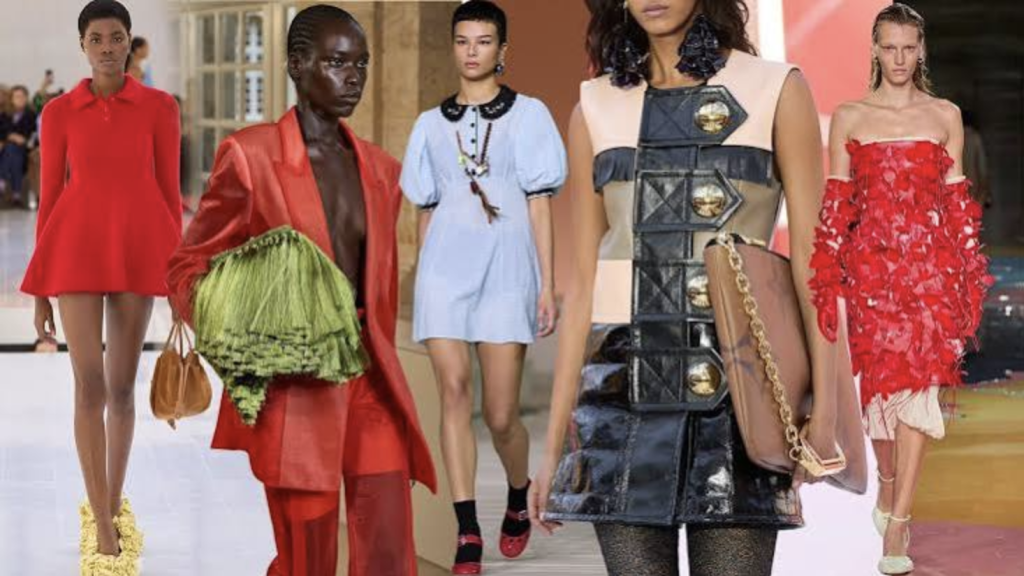
Recent fashion weeks have offered a clear view of how accessories are being repositioned within contemporary styling. Among the most visible developments is the renewed attention given to brooches, which appeared across runways in forms ranging from sculptural florals to restrained metallic bars. Rather than functioning as an afterthought, these pieces were often used to define the silhouette of a look, shift the balance of a garment, or introduce a focal point in an otherwise understated outfit.
This review examines the brooch styles that appeared most consistently across recent collections and considers how those ideas translate into everyday dressing. The emphasis is on observation and methodology: what was shown, how it was positioned, and which practical considerations tend to matter when adapting runway concepts to personal wardrobes. Because styling outcomes depend on fabric, proportion, occasion, and individual preference, the approaches described here are best understood as options rather than prescriptions.
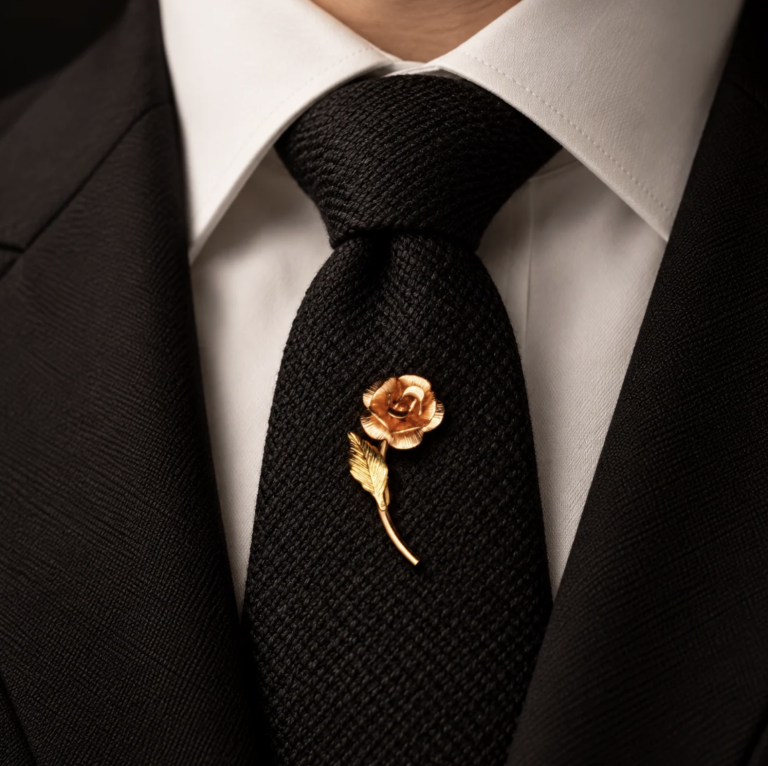
Across the season, two broad directions emerged. One leaned toward expressive, oversized floral pins that read as statement pieces. The other favored minimal metallic bars that operate more quietly, often as finishing details. Both directions share a common thread: they treat the brooch as a compositional tool rather than purely decorative trim, and they reward careful placement over sheer volume.
Oversized Floral Pins as Focal Points
Oversized floral brooches appeared frequently on recent runways, often scaled to a size that would traditionally be considered impractical. Designers used them to interrupt the line of a coat, anchor a draped neckline, or add dimension to a monochrome ensemble. The effect depended less on the flower motif itself and more on how the piece related to the garment’s construction. A bloom placed at the shoulder, for instance, draws the eye upward and can alter the perceived width of the upper body, while the same piece positioned near the waist can create a visual break in a long column of fabric.
Materials varied considerably. Some examples used layered fabric petals with visible stitching, while others employed cast metal, enamel, or mixed media. This variation matters for practical adoption because weight and rigidity influence how a brooch hangs and whether it distorts lighter fabrics. Heavier pieces generally sit more securely on structured materials such as wool, denim, or heavy cotton, whereas lighter fabric constructions tend to work better with layered or openwork designs that distribute weight more evenly.
From a styling standpoint, oversized floral pins tend to function best when treated as the primary accessory in an outfit. When other prominent elements are present, the composition can become crowded and the intended focal point is diluted. A common approach observed on runways was to keep the rest of the look relatively quiet: a solid-color knit, a plain tailored jacket, or a simple dress, with the brooch providing the visual interest. The following considerations are frequently relevant when working with this style:
- Scale relative to the body: a pin that spans a significant portion of the shoulder or lapel reads differently than one that sits within a smaller area.
- Placement stability: fabrics with a tight weave generally support heavier pins with less sagging.
- Visual balance: offsetting a large pin on one side may call for attention to the overall symmetry of the outfit.
- Occasion context: oversized florals tend to suit creative or social settings more readily than highly formal or conservative environments.
It is also worth noting that floral pins need not be confined to lapels. Runway styling showed them at the waistband, on straps, near the collar, and even grouped in small clusters. Each placement changes the relationship between the accessory and the garment, and testing placement before committing to a look is a practical way to evaluate the result.
Minimal Metallic Bars and Restrained Geometry
In contrast to the floral direction, minimal metallic bars represented a more subdued approach. These pieces typically appeared as slim horizontal or vertical elements in silver, gold, or gunmetal tones, often with a brushed or matte finish. Their appeal lies in restraint: they add a precise point of interest without competing with the garment’s line or pattern. On recent runways, metallic bars were frequently positioned along lapels, at the center of a button placket, or near the collar of a shirt, where they introduced a subtle structural accent.
The practical advantages of this style are notable. Because the form is compact and the profile is low, metallic bars tend to integrate easily into existing wardrobes and work across a range of dress codes. They can be worn singly for a quiet effect or arranged in multiples to create rhythm along a seam or edge. When several bars are used together, spacing and alignment become the primary design decisions, since irregular placement can read as intentional or accidental depending on the surrounding context.
Finish and tone also influence versatility. A matte or brushed surface tends to appear more understated and can blend with textured fabrics, while a polished surface introduces reflectivity that draws attention. In neutral outfits, a metallic bar can serve as the only jewelry-like element, which is often useful in professional or minimal styling contexts. The table below is not a rule set but a summary of observations that may help when evaluating options:
- Brushed finishes generally pair well with wool, linen, and matte knits.
- Polished finishes tend to stand out against dark or solid-colored fabrics.
- Vertical placements can create a lengthening impression along a garment’s front.
- Horizontal placements often emphasize width and can balance a narrow silhouette.
Runway presentations also suggested that metallic bars work well as connectors between other elements, such as holding a fold in place or bridging the gap between a collar and a lapel. This functional aspect is part of what makes the style adaptable, since the accessory participates in the structure of the outfit rather than sitting on top of it.
Placement, Proportion, and Fabric Interaction
Across both directions, placement emerged as the single most consequential variable. A brooch’s effect is determined by where it sits relative to the body’s lines, the garment’s seams, and the viewer’s natural points of focus. Shoulder placements tend to draw attention upward and can frame the face, while center-front placements create a vertical axis that organizes the outfit. Waist placements can define or disrupt the waistline depending on height and the garment’s cut. Because these relationships are contextual, testing placement in a mirror before wearing a piece publicly remains a practical step.
Proportion operates alongside placement. A large pin on a small frame does not automatically overwhelm, nor does a small pin on a large frame automatically disappear; the relevant comparison is between the accessory and the garment’s scale, including lapel width, collar size, and pattern repeat. Fabric interaction adds another layer: lightweight materials may require backing support to prevent distortion, while dense materials may require sharper pins to penetrate cleanly. These are mechanical considerations rather than aesthetic ones, but they influence how a look holds up over the course of a day.
Runway styling consistently treated the brooch as a compositional decision, not an isolated ornament. The accessory’s role was defined by the garment it was paired with and the space it occupied within the silhouette.
Practical adoption therefore tends to involve iteration rather than a single fixed formula. Trying a pin in two or three positions, observing how it behaves when moving, and noting whether it interferes with layers or outerwear are simple methods for evaluating suitability. These steps do not guarantee a particular result, but they provide information that supports more informed choices.
Adapting Runway Ideas to Everyday Wardrobes
Translating runway accessory trends into daily dressing generally involves a process of reduction and substitution. A runway look may combine multiple brooches, unusual placements, and dramatic scale, but an everyday version can retain the underlying idea while adjusting for context. A single oversized floral pin on a tailored coat, for example, carries the same visual logic as a more elaborate runway arrangement. Similarly, a minimal metallic bar on a shirt collar preserves the restraint of the original concept without requiring the full styling of a show presentation.
A useful method is to begin with the garment and identify its dominant lines. A structured blazer has clear lapels and seams that can host a pin naturally, while a soft knit may call for a lighter piece or a placement near the shoulder where the fabric is more stable. From there, the accessory can be selected to either reinforce or contrast with the garment’s character. This approach keeps the focus on coherence rather than on accumulating trends, and it tends to produce results that feel intentional.
Maintenance and longevity are also part of the adaptation process. Pins with secure clasps, protective backings, and appropriate weight for the fabric are generally easier to incorporate into regular rotation. Storage that prevents scratches and tangling supports the condition of metallic finishes, and checking clasps periodically can reduce the risk of loss. These practical habits are not glamorous, but they contribute to how consistently an accessory can be worn.
Observations on Direction and Restraint
The recent runway season did not present a single dominant brooch style but rather a spectrum between expressive florals and restrained metallic forms. Both directions share an emphasis on deliberate placement and considered proportion, and both benefit from evaluating the accessory in relation to the whole outfit rather than in isolation. For those exploring these ideas, the process is largely observational: identify the garment’s structure, choose a scale that fits the available space, test placement, and assess how the piece behaves in motion.
Brands and retailers have begun to reflect this interest in their assortments, and independent labels such as maple-ledger illustrate how accessory-focused design can support a wardrobe-building approach without relying on seasonal novelty alone. As with any trend, individual results vary with fabric, fit, occasion, and personal style, and the most reliable guide remains direct experimentation within one’s own closet. The runway offers vocabulary and proportion cues; the adaptation is a separate, iterative exercise.